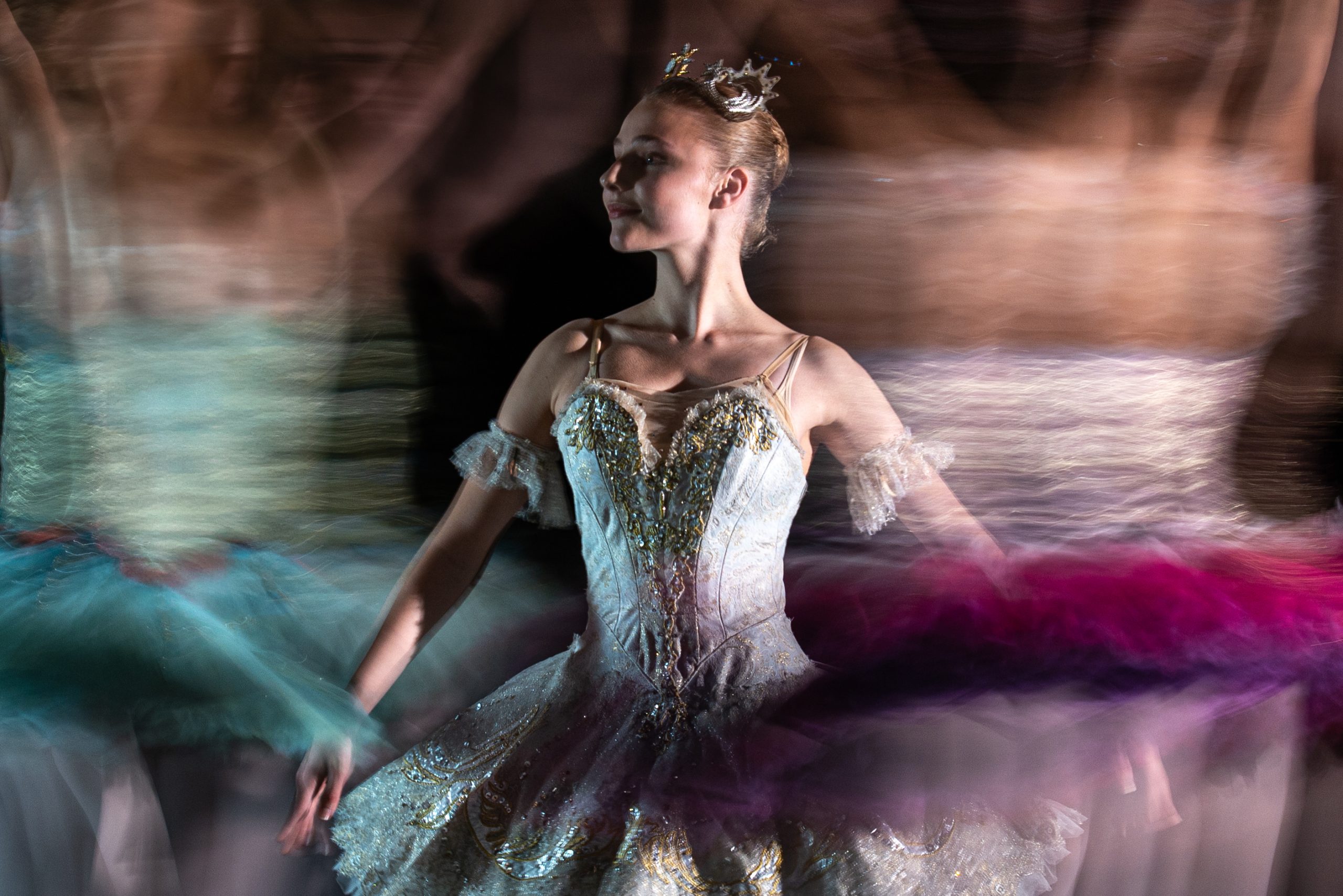
Photograph by Pierre Tappon
Few educational institutions have shaped their art form as profoundly as The Royal Ballet School. Founded by Dame Ninette de Valois in 1926, the School has nurtured generations of dancers and helped establish the international reputation of British ballet. In 2026, it is celebrating 100 years of training and inspiring the next generation, while looking ahead to a future centred on excellence, opportunity and access.
As long-standing architects to the School, everyone at 4D Studio Architects warmly congratulates The Royal Ballet School on its Centenary and on an ambitious and memorable programme of celebrations.
Rather than looking only to its distinguished past, the School has used the Centenary to explore its present and future. Performances, exhibitions, public events and specialist insight days have celebrated its history while examining how ballet training can continue to develop and reach wider audiences. A series of events at White Lodge and the Upper School considered the founding principles of the School, innovation in contemporary training and its aspirations for the future.
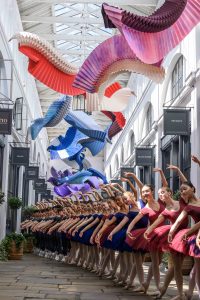 Photo: Royal Ballet School
Ballet in the heart of Covent Garden
One of the most striking moments of the Centenary came in June, when the School partnered with Covent Garden on a six-day cultural takeover of the Piazza.
From 22 to 27 June, one of London’s best-known public spaces was transformed into an open-air celebration of ballet, performance and creativity. Screenings presented students in class, on stage and creating their own choreography, while live activities and opportunities for public participation brought audiences closer to the daily life of the School.
Large-scale paper and floral installations animated the historic market building, creating a vivid relationship between movement, craft and architecture. Students also performed in the Piazza, allowing ballet to be encountered informally and spontaneously by visitors moving through Covent Garden.
The success of the takeover lay in its openness. Ballet was brought beyond the studio and theatre and placed at the centre of civic life. People who may never previously have attended a ballet performance were able to observe the discipline of a class, encounter the creativity of the students and experience dance as part of the everyday life of the city.
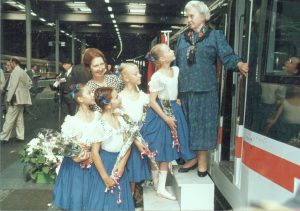
Ninette de Valoise and Junior Associates at the naming of the Birmingham Royal Ballet at Euston Station 1990. Photo Royal Ballet School
Celebrating the next generation
The Centenary Summer Performance season provided another important focus for the year. Featuring students aged from 11 to 19, the programme celebrated the commitment and artistry developed through their training and gave audiences an opportunity to see the next generation of ballet artists on stage.
The season included performances at the Linbury Theatre and Opera Holland Park before concluding on the main stage of the Royal Opera House on 18 July. The final performance brought the Centenary Summer season to a fitting close and celebrated the collective talent of students across the School.
Alongside the performances, an exhibition at the Royal Opera House has drawn on the School’s archival costumes and photography, adding further depth to the Centenary programme and offering visitors a window into the people, teaching and artistic traditions that have shaped its first hundred years.
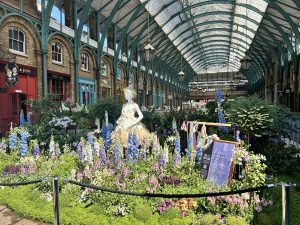 Covent Garden Takeover: Photo Royal Ballet School
Culture, architecture and public space
From an architectural perspective, the Covent Garden programme was particularly inspiring. It demonstrated how cultural institutions can activate public space and invite new forms of participation.
The Piazza was not treated simply as a backdrop. Its architecture, arcades and patterns of movement became part of the experience. Installations, screens and live performances created new points of focus and encouraged visitors to pause, gather and engage with the School’s work.
At its best, placemaking enables people to experience a familiar environment differently. The Centenary takeover achieved this through the temporary but powerful combination of architecture, public realm and performance. It was not only a celebration of ballet, but also a demonstration of culture’s ability to animate the city and create shared experiences.
Looking towards the School’s second century
4D Studio Architects has been privileged to support The Royal Ballet School over many years. The Centenary celebrations have been a reminder of what makes the School so exceptional: the quality of its teaching, the dedication of its students and staff, and its ability to combine an extraordinary heritage with continuing artistic ambition.
We extend our warmest congratulations to Iain Mackay, Artistic Director; Patrick Harrison, Chief Executive Officer; the Governors; and the School’s staff, students, families and supporters.
The Centenary has provided a fitting celebration of an extraordinary first hundred years while opening ballet to new audiences and looking confidently towards the future.
As architects, we recognise that exceptional teaching, creativity and performance depend not only on talented people but also on inspiring places in which to learn, rehearse and perform. The Royal Ballet School’s Centenary is a reminder that investing in those places is an investment in future generations of artists.